
 I would definitely recommend Oryx and Crake, by Margaret Atwood. Towards the end of the book, as the pandemic is recalled by Snowman, in two pages she summarize the current global experience. Atwood’s a little heavy-handed, and you don’t go there for the writing, but this is a really good novel chock full of ideas and keen insights (into men’s psychologies, here, since Oryx and other women are pretty much ciphers).
 Reading a few dozen pages every day of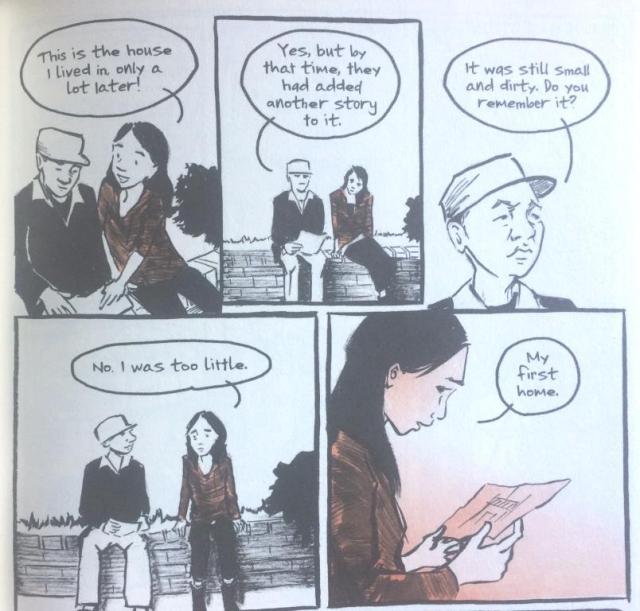
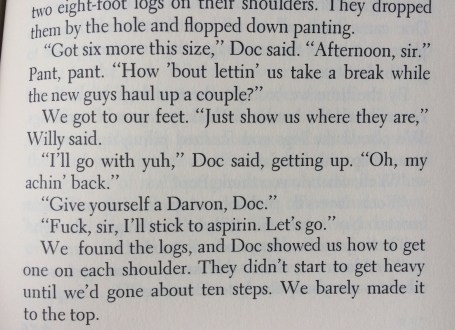 War Year by Joe Haldeman, published in 1972, is a tremendous short little novel loosely based, apparently, on Haldeman’s year in Vietnam. I got it from the library, and oddly it seems to have been classified in the Juvenile Literature section. It is far from juvenile, except that the main character is about 20, as so many other draftees were. The reality (boredom punctuated by horrific violence) of war is presented in 120 pages of clear, direct prose, with the blinders of a 20 year old from Oklahoma unvarnished. The treatment of minor African’-American and Vietnamese characters is truly a window into what was “acceptable discourse” in 1972 by the white majority. It is a novel that has to be run through to the end, without peeking. The end is really gut-wrenching. One page is all Haldeman needs. Here is a
  Reading some earlier novellas from the mid-1990s. Joe Haldeman’s “For White Hill” was a nice piece of “end of life” melancholy… when you are practically immortal but space is really big, it means there are still chances it will all be over, and how do you come to terms with that. A gathering of artists is the setting, and the story focuses on two of them.
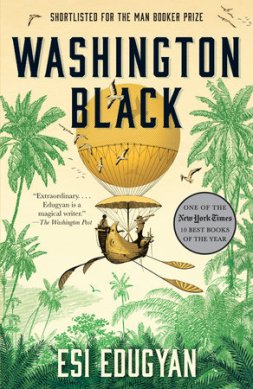 Washington Black by Esi Edugyan is a nicely written adventure novel of ideas about how to understand the history of slavery, the human stain, through examining the lives of particular people involved in the peculiar institution. Some horrific descriptions, and then a nice tour through the mid 1800s…. A great novel for a young adult interested in history. A little bit of magical realism, but not much: the cover art actually suggests more than is there. Here is a nice
  Ancestral Night by Elizabeth Bear is billed as a “space opera” and indeed it seems written with adaptation to Netflix in mind. Hard to explain otherwise the gratuitous “sexy space pirate” character (yes, that is what she is called in the novel, more than once to remind us… I was surprised when author didn’t have a character say, “Sort of like old Earth star Kristen Stewart with a short haircut who I saw once on the ‘vidartifact'” etc. I mean, they read novels in space 50,000 years from now but they don’t watch reruns of The Office? I get it, I’m a big reader too so a writer wants her heroes to also be readers… but….
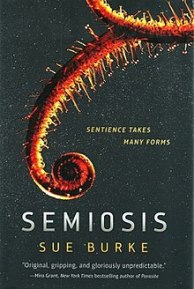 Semiosis by Sue Burke
 This book
  First of my Christmas sci-fi books to be finished was Excession, by Iain Banks. Enjoyable but unlike others I found the exchanges between ship-minds to not be very interesting. They seem modeled entirely on message board banter of computer programmers. What is so interesting about that? Several plot lines seemed to never be tied up, several characters really had little to contribute. The Affront paradox never really gets resolved: can an author pose a major philosophical problem like that and then just pretend that it goes away? So the novel raises lots of interesting questions and has many great scenes and some good characters and complications. But for sci-fi fans only, I suppose.
 Friends of African Village Libraries (I post regularly here)
- Daytime session at Sumbrungu Community Library
- COLAU Uganda libraries newsletter June 2026
- Meeting at Gowrie-Kunkua Community Library with library committee members
- Remise d’un nouveau jeu d’alphabet à la bibliothèque de Dohoun
- Update from Nyariga community library on games and books
- Résumé de la visite de l’assistance chargé de programme à la bibliothèque de Boni
- Visite de la Bibliothèque Mobile Pénélope à l’école Sainte Thérèse de Jésus
- Newsletter Burkina Faso libraries June 2026
- Visite de l’animateur de ABVBF à la bibliothèque de Dohoun
- Séance de jeu de Puzzle à la bibliothèque de Karaba
 Michael Kevane