Illiterate kids given sealed boxes with tablets figure out how to use, master, and hack them – Boing Boing

More idiotic hyperbole from the OLPC people, who want to take your money away from proper libraries with proper books.  Ask yourself, if he has to outright lie about the product, why should anyone give any money to it?

The experiment is being done in two isolated rural villages with about 20 first-grade-aged children each, about 50 miles from Addis Ababa. One village is called Wonchi, on the rim of a volcanic crater at 11,000 feet; the other is called Wolonchete, in the Rift Valley. Children there had never previously seen printed materials, road signs, or even packaging that had words on them, Negroponte said.

“Never seen printed materials…”?  Who is he kidding?  Only someone who has been reading only Boingboing for last 10 years would believe that, or not immediately say, “Baloney.  Don’t they use money there? Don’t they have ID cards?  You bet they do.”

via Illiterate kids given sealed boxes with tablets figure out how to use, master, and hack them – Boing Boing.

Posted in Development thinking | Comments Off on Illiterate kids given sealed boxes with tablets figure out how to use, master, and hack them – Boing Boing

Great video report by Koffi Amétépé on albinos in Burkina Faso

Posted in Burkina Faso | Comments Off on Great video report by Koffi Amétépé on albinos in Burkina Faso

Meet Don Francisco, Host of the TV Show ‘Sábado Gigante’

Otro articulo tan interesante, de mi hermana!!!

This fall, the wildly popular Spanish-language television show Sábado Gigante Supersize Saturday—seen by millions of Hispanics around the world for two hours every Saturday afternoon—celebrates its 50th anniversary. This makes it, according to the Guinness Book of World Records, the longest-running variety show in the history of television.For those who haven’t seen it, Sábado Gigante offers light entertainment that at times borders on the ridiculous and, at other times, on the inspiring. There are contests and games, a standing competition for a Ford Fiesta, parodies, music, and a beauty contest called “Miss Colita,” along with moving personal life stories and discussions of controversial political issues like immigration. And although the show is lighthearted entertainment, politicians worldwide recognize that it is a potent conduit to the growing political power of the Latino voting bloc.

via Meet Don Francisco, Host of the TV Show ‘Sábado Gigante,’ and a Chilean Son of Holocaust Survivors – Tablet Magazine.

Posted in Culture | Comments Off on Meet Don Francisco, Host of the TV Show ‘Sábado Gigante’

15 octobre 1987 analysis of interview of Sherif SY on Sankara’s death

Interrogé sur ses relations avec SANKARA et par la suite ce qu’ils se sont dit à leur dernière rencontre, il a déclaré ceci : « …si ma mémoire est bonne, je crois que la dernière fois que j’ai dû voir le président SANKARA, c’était le 13 octobre 1987.Et c’était pour parler de la situation qui prévalait à l’époque, … Bon, ça, je ne peux pas tout vous dire pour des raisons que vous comprendrez. Mais ce que je peux dire déjà, c’est que nous avons eu à parler de la situation qui prévalait parce qu’il était manifeste qu’il y aurait un clash et nous nous disions qu’il y avait quand même un certain nombre de mesures à prendre par rapport à cela. Le camarade Thomas SANKARA rétorquait en disant : « Qu’est- ce que vous voulez que je fasse ? Vous ne voulez pas que je prenne un tel pour le mettre dans une bouteille ? Vous ne voulez pas que j’envoie un tel comme ambassadeur ? Et s’il refuse ? Ou bien vous voulez que je tue un tel ? Parce que si vous me dites qu’il faut tuer quelqu’un ou embastiller quelqu’un, je ne le ferai pas. ».Ce n’est qu’un pan, il y a d’autres aspects que je pense que, pour des considérations historiques, ce n’est pas le moment d’en parler. Mais je pense que, le 13 octobre 1987, les dés étaient déjà pipés. Nous, à notre petit niveau, on le savait déjà. Donc, les forces s’organisaient et tout le monde savait ».

via 15 octobre 1987 : Tout finira par se savoir ! – leFaso.net, l’actualité au Burkina Faso.

Posted in Burkina Faso, Politics | Comments Off on 15 octobre 1987 analysis of interview of Sherif SY on Sankara’s death

Stephen Pinker takes on “Silent Violence”

One of my PhD advisors at Berkeley was Michael Watts, whose wonderful, massive, and dense work Silent Violence was a great inspiration…. but like Pinker remember thinking that while I understood the argument– social structure led to outcomes, like death through famine, as inexorably as a two-by-four– I wasn’t sure whether it was a helpful argument to be making in terms of clarifying concepts.  In particular, the “inexorable” part just doesn’t work.

From Pinker:

Isn’t economic inequality a form of violence? 

No; the fact that Bill Gates has a bigger house than I do may be deplorable, but to lump it together with rape and genocide is to confuse moralization with understanding. Ditto for underpaying workers, undermining cultural traditions, polluting the ecosystem, and other practices that moralists want to stigmatize by metaphorically extending the term violence to them. It’s not that these aren’t bad things, but you can’t write a coherent book on the topic of “bad things.”

Posted in Development thinking | Comments Off on Stephen Pinker takes on “Silent Violence”

Pour rire…

Posted in Burkina Faso | Comments Off on Pour rire…

Moretti becomes the go-to geography pundit, and what does it mean for Burkina Faso?

I see Enrico Moretti’s name more and more, he’s on track to join the glitterati celebrity intellectuals…  Here is is on the role of agglomeration in human capital The key to economic success? Geography – Global Public Square – CNN.com Blogs.

Historically, there have always been prosperous communities and struggling communities. But the difference was small until the 1980’s, and has been growing dramatically since then. In 1980, the salary of a college educated worker in Austin was lower than in Flint. Today it is 45 percent higher in Austin, and the gap keeps expanding with every passing year. The gap for workers with a high school degree is a staggering 70 percent by some estimates. It is not that workers in Austin have higher IQ than those in Flint, or work harder. The ecosystem that surrounds them is different. The mounting economic divide between American communities – arguably one of the most important developments in the history of the United States of the past half a century – is not an accident, but reflects a structural change in the American economy.

But what, I wonder, does this mean for a county like Burkina Faso?  Move to Ouagadougou?  Invest even more to become the regional hub even though there isn’t enough water or amenities to sustain the location as a truly desirable spot?  For all the critics of Ouaga 2000 and the new airport in Donsin, this is in fact exactly what it does… isn’t it the right strategy?

Posted in Economy | Comments Off on Moretti becomes the go-to geography pundit, and what does it mean for Burkina Faso?

Even more evidence about how intuitively cooperative we are

We ask whether people are predisposed towards selfishness, behaving cooperatively only through active self-control; or whether they are intuitively cooperative, with reflection and prospective reasoning favouring ‘rational’ self-interest. To investigate this issue, we perform ten studies using economic games. We find that across a range of experimental designs, subjects who reach their decisions more quickly are more cooperative. Furthermore, forcing subjects to decide quickly increases contributions, whereas instructing them to reflect and forcing them to decide slowly decreases contributions. Finally, an induction that primes subjects to trust their intuitions increases contributions compared with an induction that promotes greater reflection. To explain these results, we propose that cooperation is intuitive because cooperative heuristics are developed in daily life where cooperation is typically advantageous. We then validate predictions generated by this proposed mechanism. Our results provide convergent evidence that intuition supports cooperation in social dilemmas, and that reflection can undermine these cooperative impulses.

via Spontaneous giving and calculated greed : Nature : Nature Publishing Group.

Posted in Development thinking | Comments Off on Even more evidence about how intuitively cooperative we are

AIGA | Case Study: Neighborhoods and Shared Memories/Nuestros vecindarios y sus memorias

Mariano Desmaras was always “my friend’s little brother” but now here he is winning awards…. congratulations!  And I see some inspiration for FAVL’s microbooks project here, as we shift into community history!

“Neighborhoods and Shared Memories” (Nuestros vecindarios y sus memorias) is a community-sourced exhibit that empowers its members to tell the story of their neighborhoods in their own words. Researchers from the design team, working with the museum’s researchers, gave shape to this collection through the grouping of stories and artifacts around themes that emerge from the collection overall. This is a significant break from the more traditional museum exhibits where a curatorial team establishes an exhibit’s story lines; with “Neighborhoods and Shared Memories,” the community is the curator.

We worked with a plurality of voices that do not necessarily build a single narrative, but rather create a web of themes that will carry on for the museum as the project continues, in future iterations, to examine El Paso’s other neighborhoods and districts. Like a casual visit to a neighborhood, where locals approach you and tell you local history from their perspective, the emphasis is on the experience of interpreting a community through the images and stories its members share. The “take away” for the visitors lies in the broadness and authenticity of the experience, and less a linear, certifiable narrative.

via AIGA | Case Study: Neighborhoods and Shared Memories/Nuestros vecindarios y sus memorias.

Posted in Culture | Comments Off on AIGA | Case Study: Neighborhoods and Shared Memories/Nuestros vecindarios y sus memorias

No pity for disingenuous “no pity shit” aid op-ed

Publicity-hungry entrepreneurs have special advisors who sit in rooms all day cooking up catchy one-liners that will get them noticed, never mind the incoherence of whatever they have to say.  The latest such is Magatte Wade, a Senegalese skin-care mogul-in-the-waiting married to “bleeding-heart libertarian” Michael Strong, buddy of Whole Foods mogul John Mackey.  She’s connected!  She’s also spent many years living in small villages interacting with development/aid workers.  Not.  But really, she knows all about them!  As she tells us in her op-ed.

I know as a Senegalese that her attitude [a woman questioning how to help the poor from a position of privilege] is precisely what disgusts us about many who work at NGOs. Every year we see thousands of “privileged” young Americans and Europeans eager to come “help the underprivileged”. Don’t they understand how contemptuous that is?

[MK Note- I’ll remember Wade’s spin on the desire to help next time I read the parable of the Good Samaritan.  Contempt!  And BTW, the woman was precisely asking about this issue, so not clear why Wade is disgusted…]

I prefer the humanity of a tough business person in a negotiation in which he or she is trying to make a deal. While there are jerks out there, I want to be engaged in relationships with people who believe that I’m worth struggling with, not just pitying. If you approach me with a worldview in which you are privileged and I need your help, there is no possibility of an authentic relationship. You may as well see yourself as the master and me as the slave.

[Again, not to go on and on about the parables, but this is just like those whining workers at the vineyard wanting to be paid more… Matthew 20!]

I know that there are countless people in the NGO world that have done a great deal of good. But I would like to propose that NGOs either refuse to hire, or simply fire, anyone who has a condescending attitude towards the poor. We need to certify a new class of NGO: “No pity shit” NGOs. Moreover, the problem goes well beyond these organisations. Many from the developed world – in government, multilateral agencies, business, and academia – have a similar attitude. I don’t understand why it is so hard for some humans to see other humans as also human. Your perception of “privilege” is your problem. Get over it.

Completely incoherent.  So no-one is privileged.  Or, some people are privileged, but only libertarians have the right attitude about their privilege… and only their message: poor people should strive to be privileged too just like us…. is a non-racist message.

Posted in Development thinking | Comments Off on No pity for disingenuous “no pity shit” aid op-ed

The way the world is right now 2012

Posted in Burkina Faso | Comments Off on The way the world is right now 2012

Echos des bibliothèques au Burkina Faso

Posted in Burkina Faso | Comments Off on Echos des bibliothèques au Burkina Faso

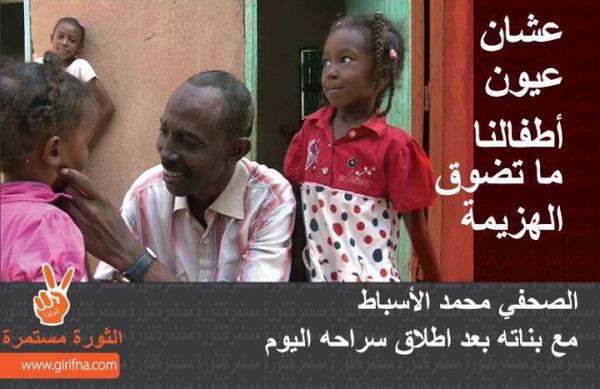
Girifna in Sudan

Posted in Burkina Faso | Comments Off on Girifna in Sudan

Really? Do nothing? Bruce Whitehouse on Mali

Bruce Whitehouse concludes his overview, in London Review of Books. of what happened in Mali (pretty much the standard story), with this paragraph:

What does Mali’s spectacular slide from celebrated democratic model to failed state augur for the rest of Africa? The number of electoral democracies on the continent has fallen from 24 to 19 in the last seven years. It may be that Mali is a portent of state collapse to come, as the façade of democracy erodes, exposing the informal government mechanisms that really run the show. What if, as the historian Stephen Ellis has argued, the increasing fragility of African states is ‘an early sign of a wider problem with the system of international governance’ built after World War Two? Western powers are discovering that in Africa, as in Afghanistan, there are limits to their ability to impose or even reform state systems. It may be that the way to help these societies sort out their conflicts is to let them do it on their own.

Especially that last line, rankles.  “The way.”  Not one among many possible good ways.  Maybe as a matter of tactics, the U.S. military doesn’t understand subtlety, and when you are writing in LRB they and State Dept. are your audience (hence the “impose”), so this is code language for don’t do really stupid things like invade northern Mali.

But for any other audience (after all, who is “help” referring to?), I just can’t get over the sentence’s odd phrasing: “these societies” and “their conflicts” on “their own”…. these, their, them their…. not language of “our”…. As if Mali was a “them” different from “us.”  As if readers of London Review of Books knew who “us” was?  Especially coming from an anthropologist who has written about transnational communities.

Obviously my discomfort is a subtle thing, but imagine someone writing about Russia, urging a human rights civil society group to go easy on their reporting of prison conditions, and stop meeting and supporting local civil society advocates, because Russia should “do it on their own.”  I’d really be much more interested in concrete and well-thought-out suggestions for civil society cooperation and coordination, than advice to “let them do it on their own.”

PS.  I also really dislike pop culture analysis like this, and was surprised to see it: “Malians love to blame their country’s predicament on foreign (particularly French) interference, but they seldom examine their own role in the weakening of their country’s institutions.”  It is fine to say these kinds of things in private, as conversation, but as an “expert”?  Is there any methodology behind this statement?  How was “love” measured?  A nationally-representative survey?  What is the frequency of “seldom”?  Is “seldom” the same as the number of times Americans in ordinary conversation question whether they should be more politically active regarding the wars in Afghanistan and Iraq?


Posted in Development thinking, Politics | Comments Off on Really? Do nothing? Bruce Whitehouse on Mali

Sachs review of Acemoglu and Robinson

According to the economist Daron Acemoglu and the political scientist James Robinson, economic development hinges on a single factor: a country’s political institutions. More specifically, as they explain in their new book, Why Nations Fail, it depends on the existence of “inclusive” political institutions, defined as pluralistic systems that protect individual rights. These, in turn, give rise to inclusive economic institutions, which secure private property and encourage entrepreneurship. The long-term result is higher incomes and improved human welfare.What Acemoglu and Robinson call “extractive” political institutions, in contrast, place power in the hands of a few and beget extractive economic institutions, which feature unfair regulations and high barriers to entry into markets. Designed to enrich a small elite, these institutions inhibit economic progress for everyone else. The broad hypothesis of Why Nations Fail is that governments that protect property rights and represent their people preside over economic development, whereas those that do not suffer from economies that stagnate or decline. Although “most social scientists shun monocausal, simple, and broadly applicable theories,” Acemoglu and Robinson write, they themselves have chosen just such a “simple theory and used it to explain the main contours of economic and political development around the world since the Neolithic Revolution.”Their causal logic runs something like this: economic development depends on new inventions such as the steam engine, which helped kick-start the Industrial Revolution, and inventions need to be researched, developed, and widely distributed. Those activities happen only when inventors can expect to reap the economic benefits of their work. The profit motive also drives diffusion, as companies compete to spread the benefit of an invention to a wider population. The biggest obstacle to this process is vested interests, such as despotic rulers, who fear that a prosperous middle class could undermine their power, or owners of existing technologies, who want to stay in business. Often, these two groups belong to the same clique…

Gated, at Foreign Affairs.

Posted in Development thinking | Comments Off on Sachs review of Acemoglu and Robinson

If I had a million dollars

I’d remake The Wild Thornberrys (the movie) and keep the exact same story except make the Thornberrys  an African family, and Eliza an young African girl.  It is one of the most perfect children’s movies, but why does the heroine have to be white?  No harm in hoping.

Posted in Culture | Comments Off on If I had a million dollars

My feeling exactly on The Marriage Plot

Disappointing, overrated, just not good: What book did you feel you were supposed to like, and didn’t? Do you remember the last book you put down without finishing?

“The Marriage Plot,” by Jeff Eugenides, and “The Stranger’s Child,” by Alan Hollinghurst. I’d heard Jeff Eugenides on NPR and immediately wanted to read his novel. I adored the first two Hollinghursts. But I found both of these novels somewhat cold and inanimate. That said, there are so many books that I wasn’t able to appreciate until I’d made two or three tries — “Middlemarch,” for example, or “Swann’s Way” — and these may fall into that category. Reading is so contextual, like wine.

via Sylvia Nasar – By the Book – NYTimes.com.

Posted in Burkina Faso | Comments Off on My feeling exactly on The Marriage Plot

U.S. Seeks to Step Up Africa Investment – NYTimes.com

But these companies need no introduction to the continent, which is home to 7 of the world’s 10 fastest growing economies. They are already here. Earlier this year, Walmart finalized a deal worth more than $2 billion to acquire 51 percent of South Africa’s leading retailer, MassMart. G.E. has signed a deal with the Nigerian government to work together on infrastructure and power projects. Six hundred American companies have invested in South Africa alone.Mrs. Clinton’s trip, expected to stretch over the better part of two weeks and nine countries, reflects the shifting image of the continent and the deepening political, economic and security stakes at play here. There was a time in the not-too-distant past when a trip to Africa by a senior United States official would focus largely on humanitarian aid and development assistance to hopelessly poor, war-torn nations.No more. These days, the continent is widely seen as the next frontier for economic growth. Politically, African votes are sometimes crucial in the United Nations, particularly South Africa’s. On the security front, alliances with African governments to fight terrorism and piracy are very important to the United States.

via U.S. Seeks to Step Up Africa Investment – NYTimes.com.

Posted in Burkina Faso | Comments Off on U.S. Seeks to Step Up Africa Investment – NYTimes.com

Law Librarian Blog: Sixth Circuit Makes Faculty Tenure Almost Meaningless

When is tenure not tenure?  The answer according to the Sixth Circuit Court of Appeals is that the grant of tenure is defined by the terms of the employment contract rather than a philosophical understanding of tenure.  The Cooley law school dismissed tenured Professor Lynn Branham at the end of her one year contract in December of 2006.  There had been disputes over the subjects of the classes assigned to Professor Branham in that period.  The school wanted her to teach constitutional law and torts, though her vocal preference was to teach criminal law.  She did teach those classes in the spring semester and took a medical leave over the summer.  She was again assigned those classes in fall but refused to teach them.  The school dismissed her in December of that year.

She sued Cooley on various counts, most of which were dismissed by the District Court.  The one claim in which she prevailed was breach of contract.  The school had not followed its contractual process that called for a hearing before the full faculty with the possibility of an appeal to the school’s Board of Directors in case of an adverse decision.  The District Court ordered the hearing to be held.  Professor Branham lost by a vote of 89-15 and the Board upheld the dismissal.

The opinion describes the relevant issue at hand:

Continue reading

Posted in Burkina Faso | Comments Off on Law Librarian Blog: Sixth Circuit Makes Faculty Tenure Almost Meaningless

Eko India… financial services for the poor… will they compete with M-Pesa?

Posted in Burkina Faso | Comments Off on Eko India… financial services for the poor… will they compete with M-Pesa?