What are Sanders’ economic policies?

I am finally starting to ask the questions, as friends and colleagues start taking positions and debate the substance of Clinton versus Sanders.  His website with economic positions is here.  I have quoted for most, and added a little bit of commentary.

  1. Greatly expand Medicare system, basically creating a single-payer system for health care.  Sure, uh, I guess.  This seems to ignore all the entrenched interests (just think about all the doctors and nurses in the United States who would oppose this) and institutional legacies that make this really really hard to implement.
  2. “As president, Sen. Sanders will stop corporations from shifting their profits and jobs overseas to avoid paying U.S. income taxes.”  No specific policy proposal.
  3. “He will create a progressive estate tax on the top 0.3 percent of Americans who inherit more than $3.5 million.”  Currently the cut-off is $5.4 million.  So this affects estates between 3.5 and 5.4.  Let’s say that there are 10,000 estates a year with average value of $4 million, and the eventual rate is 25% on this wealth (the rate for above $5 million is 40%).  So the tax revenue (assuming no tax avoidance!) would be about $10 billion.  OK, sounds like a good change.  In fact, surprisingly modest for a revolution!
  4. “He will also enact a tax on Wall Street speculators who caused millions of Americans to lose their jobs, homes, and life savings.”  No specifics.  Will he differentiate speculators from investors?
  5. “Increasing the federal minimum wage from $7.25 to $15 an hour by 2020.”  This may not be such a great policy for those midwestern towns that are losing their manufacturing plants.  But super good for the Bay Area.
  6. “investing $1 trillion over five years towards rebuilding our crumbling roads, bridges, railways, airports, public transit systems, ports, dams, wastewater plants, and other infrastructure needs.”… but… “This report provides information on spending by federal, state, and local governments for transportation and water infrastructure, which totaled $416 billion in 2014.” So Sanders is proposing an additional $200 billion at the Federal level?  I got no problem with that. Seems like a good time to do pretty substantial infrastructure investment.
  7. “Reversing trade policies like NAFTA, CAFTA, and PNTR with China that have driven down wages and caused the loss of millions of jobs. If corporate America wants us to buy their products they need to manufacture those products in this country, not in China or other low-wage countries.”  This, to me, is just plain silly as a policy statement.  Does Sanders really think that Toyota should not be allowed to sell Prius’s in the United States?  Should all assembly plants in Mexico be closed?   Is Sanders really making a distinction between “corporate America” and “corporations from other countries”?  Only American corporations *need* to manufacture in the United States, under the policy?  What about the Littlefoot movie franchise films? Are they not going to be able to hire Korean animators anymore?  I guess tattoo artists will be happy… but wait, are Dia de los muertos tattoos drawn in Mexico permitted to cross the border?
  8. “Creating 1 million jobs for disadvantaged young Americans by investing $5.5 billion in a youth jobs program.” $5,000 per job seems really low.  I assume the labor economists would snort at this proposal.  Americorps I think costs about $25,000 per job, maybe more.
  9. “Fighting for pay equity by signing the Paycheck Fairness Act into law.”  Devil here in the details.  Compensation in a market economy is tremendously resistant to simplistic solutions.  Just think, for example, about that older worker who has been with a company 30 years.  Thirty years means his or her salary might be a lot higher than someone who is doing the same work who just got hired 1 year ago.  Should there be equal pay, mandated, in order not to have age discrimination?  Turns out the Paycheck Fairness Act is actually a very modest act submitted by Michulski that calls for enhanced enforcement provisions against gender discrimination, training, and research. It does not provide a kind of “equal pay for equal work” mandate.  All clear, folks, nothing to worry about.
  10. “Making tuition free at public colleges and universities throughout America.”  Lots of debate amongst economists on the value of this.
  11. “Expanding Social Security by lifting the cap on taxable income above $250,000.”  So I guess he means raising the social security tax.  No problems there.
  12. “Requiring employers to provide at least 12 weeks of paid family and medical leave; two weeks of paid vacation; and 7 days of paid sick days.”  Fine with that.
  13. “Enacting a universal childcare and prekindergarten program.”  Why not greatly expanding offerings for low income households, and not worry about making it universal?
  14. “Making it easier for workers to join unions by fighting for the Employee Free Choice Act.” Probably pretty minimal impact.  Unions have been on steady decline because the nature of work has changed a lot.  Will not be reversed.
  15. “Breaking up huge financial institutions so that they are no longer too big to fail.”  No details on exactly what he means.  Here is Sanders’ office own press release on his bill, again no details.  See some commentary here.

So after looking through the Sanders revolution in terms of economic policy, it seems like pretty standard Democratic Party fare.  Meaning it is just ARRA of 2009 all over again, and the only way to get some of these provisions through Congress would be compromise with Republicans.  I am a little surprised at how unambitious the plan actually seems to be.  No expansion of negative income tax (earned income tax credit).  No carbon tax.  No consumption tax.  No minimum guaranteed income.  No ending of agricultural subsidies.
Posted in United States | Comments Off on What are Sanders’ economic policies?

The Geography of Trumpism

What sometimes surprises me sometimes about my very liberal friends is how much they seem to care about this marginalized population, to the extent that they want a whole set of trade and competition-regulating policies to protect and support them, not realizing that the burden of those policies might well be on other marginalized populations living in the two coasts (urban lower classes) who are far more sizable than the midwestern marginalized populations.  So we are back to the world of hugely expensive and inequitable agricultural support payments but now for manufacturing and small town-ness… I suppose on one hand the argument that “the rich people are using regulations to their benefit even more so we are just getting our share” is hard to beat rhetorically, but I wonder if it has that much basis in fact… I guess intellectual property is one area, where Disney shareholders keep making it more expensive to enjoy Disney products… I feel like that has a easy “social revolution” rather than regulatory answer… the whole buy local and small movement  is responding to that problem…

“It’s a nonurban, blue-collar and now apparently quite angry population,” said William Frey, a demographer at the Brookings Institution. “They’re not people who have moved around a lot, and things have been changing away from them, but they live in areas that feel stagnant in a lot of ways.”

Source: The Geography of Trumpism – The New York Times

Posted in Politics | 4 Comments

Pinkshinyultrablast – Comet Marbles

Posted in Politics | Comments Off on Pinkshinyultrablast – Comet Marbles

Roch Marc Christian Kaboré after two months as President of Burkina Faso

This opinion piece reviews the first two months of the new Burkinabè administration.  Notable is that every “fact” is an action by some actor other than the government.  Not a single “act” by the government in the first 60 days worth noting?  I’ll have to do a little more reading; somebody must have a review piece saying what the government has done besides reacting to terrorism, strikes, domestic militias, and failed coup revanchists.

29 décembre 2015 – 29 février 2016. Deux mois que Roch Marc Christian Kaboré a été investi dans ses fonctions de président du Faso. Trop tôt pour un quelconque bilan mais que de nombreuses secousses qui ont fait tanguer le pavillon battant Burkina Faso au cours de ces 60 jours. Pataarbèba Burkindbila Zagré, dans cette analyse revient sur les faits qui ont jalonné cette période et énuméré les défis des nouvelles autorités du Faso.

Source: Roch Marc Christian Kaboré : 60 jours à Kosyam : dépits et défis

Posted in Politics | Comments Off on Roch Marc Christian Kaboré after two months as President of Burkina Faso

Who is killing the donkeys of West Africa for their skins?

The prices of donkey skins have soared.  Nobody is quite sure. But China seems to be the destination for the skins. A tulip market? Increased real as opposed to speculative demand?

Aéroport international de Ouagadougou, début février 2016. Des dizaines de sacs bien emballés sont stockés devant le magasin de la zone de fret. « Savez-vous ce qu’il y a dans ces sacs ? », me questionne ce jour-là le chef de bureau des douanes de l’aéroport, Evariste Somda. « Ce sont des peaux d’ânes », rétorque-t-il aussitôt. Puis, il ajoute : « Les documents d’exportation sont corrects. Mais j’ai fait bloquer les colis parce que ce trafic d’un genre nouveau m’inquiète en ce début d’année».

Source: Exportation de peaux d’ânes: le génocide programmé de l’espèce asine

And see this company’s site.

From Wikipedia: Donkey-hide gelatin or ass-hide glue (Latin: colla corii asini) is gelatin obtained from the skin of the donkey (equus asinus) by soaking and stewing. It is used as an ingredient in traditional Chinese medicine,[1][2] where it is called ejiao (simplified Chinese: 阿胶; traditional Chinese: 阿膠; pinyin: ē jiāo).  The gelatin is produced in several coastal provinces of China: Jiangsu, Zhejiang, Shandong. Shandong’s Dong’e County was where “ejiao” got its name.

Posted in Economy | Comments Off on Who is killing the donkeys of West Africa for their skins?

It just doesn’t seem like a good use of the word concurrence

Probably Trump meant “consideration” but something in him said “use a bigger word”…

By the way, the Trans-Pacific, if you look at the TPP, a total disaster, which, by the way, Marco is in favor of, they need — it is a disaster for our country. It’s trying to be approved by various people, including President Obama. And I’ll tell you something. The biggest problem with that is: They don’t take into concurrence the devaluation. They’re devaluing their currency.

Source: The Fox News GOP debate transcript, annotated – The Washington Post

Posted in Politics | Comments Off on It just doesn’t seem like a good use of the word concurrence

Anecdotes about the power of libraries never stop coming

Growing up, Clementine spent much of his teenage years at the library, which became his sanctuary. He was taken by the writing of William Blake and Immanuel Kant, and was particularly interested in the work of the 17th-century philosopher John Locke, whose ‘‘Essay Concerning Human Understanding’’ he consumed like ‘‘fatherly wisdom.’’ ‘‘I didn’t blend well with my classmates or my teachers,’’ he said. ‘‘So I did my homework here, and all of a sudden that was my life.’’ It seemed to me that Clementine’s autodidacticism was his way of asking how one should be in a world that doesn’t make sense — the type of inquisitive probing we get in his soulful songs, which draw on the work of French performers such as Léo Ferré, Édith Piaf and Henri Salvador. ‘‘I wanted to find people who were like me, and I did, in the people I was reading.’’

Source: Unlocking the Mystery of Benjamin Clementine – The New York Times

Posted in Public library history | Comments Off on Anecdotes about the power of libraries never stop coming

Nice article by Jeffrey Gettleman on possible corruption in Kenya

Suggests just how easy it is to make a ton of money through corruption when you have a billion dollar company basically wanting to “give” you $500,000 with no oversight.

In a contract signed several years ago, Nike agreed to pay hundreds of thousands of dollars in honorariums and a one-time $500,000 “commitment bonus,” which the former employee called a bribe. The money was supposed to be used to help train and support poor Kenyan athletes who dream of running their way out of poverty. Continue reading the main story Related Coverage Kenyan Runners Accuse Officials of Stealing From Sponsorship DealNOV. 23, 2015 Instead, it was immediately sucked out of the federation’s bank account by a handful of Kenyan officials and kept off the books.

Source: Money Given to Kenya, Since Stolen, Puts Nike in Spotlight – The New York Times

Posted in Politics | Comments Off on Nice article by Jeffrey Gettleman on possible corruption in Kenya

When does an economist laugh out loud?

If you are me, it is when reading things like this comment by Michael Foody on a Marginal Revolution blog entry about Brita water filter that detects and orders replacement filters.

Using disposable consumer goods to solve ever smaller problems seems like a good long term strategy for innovation. We’ve been deep into diminishing returns ever since we got safe clean hot or cold water at home for practically no money by turning a knob. What’s stagnated isn’t technology, it’s technology’s ability to improve the quality of life of this particular primate. Once won’t starve or die of exposure and will probably live within 15 years of maximum lifespan of your species, might as well boil the earth in a doomed quest to outrun boredom with zero sum status competition.

Source: The smart wi-fi water pitcher – Marginal REVOLUTION

Posted in United States | Comments Off on When does an economist laugh out loud?

Light reading these last couple weeks: Faber and Mitchell

I read Michael Faber’s The Book of Strange New Things. Definitely compares nicely to Mary Doria Russell’s The Sparrow, if you have read that. A missionary travel to Oasis, where the Oasans are a remarkably simply, vulnerable, Jesus-loving agrarian society. It is not unintentional that the colony of humans sent to the distant world is specifically recruited to be just like (almost) the Oasans: simple, vulnerable, Jesus-indifferent high tech society solving exactly the same problems (food, water, shelter) that the Oasans are solving. Peter, the missionary (Peter?!) lives in both worlds (well, for a few months). For me, with my anthropological background and lots of exposure to people “going native,” the book had lots to appreciate… Faber has a keen ear for how 10 days of immersion in another culture makes one an “expert” compared to those whose attitude is “So what do they do all day?” He has some really nice descriptions of that immersion experience. Peace Corps volunteers would totally appreciate the book. Steve Davies would appreciate it too!  It is  a significant brief for travel: for people like Peter, immersion experience accelerates (to light speed?) mental processes of identity and character.  Who are you and where are you going?  May as well be Gauguin in Tahiti.  The book has several neat tricks: a rendering of Oasan speech in English that is clever; excellent description of the thick, humid atmosphere of the planet; “shocker” ending as the reason for the Oasan Jesus-loving is suddenly revealed.  I did not like so much the device of the epistles from Peter to his wife back on Earth.  And in the end, for me, all novels that are fundamentally about “belief in a deity” seem sort of weird, especially even in a world of travel beyond light-speed.  At one level I understand: that’s the way people are.  At another level I cannot understand: how can their thoughts be so different?  But that, ultimately, is the goal of science-fiction, no? To find the stranger/alien inside of us.

And just for fun after that I read through David Mitchell’s Cloud Atlas.  I had seen the movie, I believe while under some kind of mind-altering influence, some years back. I remember it being really annoying, because the breathtaking reach of the story just didn’t match the excruciating mundanity of the journey of the story: to travel ten centuries you still have to have a car chase… Ben Hur, right? So the book was the same, except that since it is in your brain you can skip more easily the mundane parts and go straight to the shivery sections. Reading really is much better.  By the way, Gauguin permeates Cloud Atlas, too, I think. Arsenic poisoning, Pacific islands, masterpieces, missionaries.

Posted in Politics | Comments Off on Light reading these last couple weeks: Faber and Mitchell

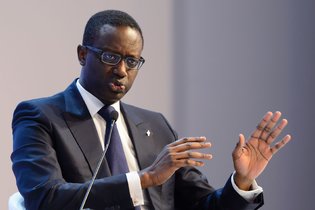
Credit Suisse C.E.O. Asks for a Cut in His Bonus

Tidjane Thiam, the chief executive of Credit Suisse, has asked the company’s board to reduce his bonus, days after the Swiss bank reported a multibillion-dollar loss in the fourth quarter. “I have asked the board of directors for a significant reduction in my bonus,” Mr. Thiam said in a statement issued by the bank on Sunday. Mr. Thiam, who joined the bank in July, did not indicate the size of the reduction in his bonus, but said his was the largest reduction within the management team.

Source: Credit Suisse C.E.O. Asks for a Cut in His Bonus – The New York Times

Posted in Politics | Comments Off on Credit Suisse C.E.O. Asks for a Cut in His Bonus

Not the new Linda Rondstadt, but she (Lindi Ortega) is pretty good

Posted in Politics | Comments Off on Not the new Linda Rondstadt, but she (Lindi Ortega) is pretty good

Even when you are en economist, you can want to be an astronaut

The amazing astronaut is Sunita Williams.

Posted in Politics | Comments Off on Even when you are en economist, you can want to be an astronaut

The Race for Space by British alternative group Public Service Broadcasting

My brother gave me this CD for Christmas.  It makes an addictive present, and you will never, ever, forget Yuri Gagarin, Alexei Leonov (did you even know he was the first person to walk in space?) and the three astronauts who died in the cockpit of Apollo 1 (Grissom, Chafee and White).  My kids like it too.

In his positive review of the album for Drowned in Sound, Marc Burrows wrote that “the joy [in The Race for Space] is in how the duo marry theme and function”, citing specifically the album’s instrumentals and their fit to the archival recordings used, such as “the beeping signal of the pioneering “Russian moon” built into the loping, housy rhythm of ‘Sputnik'”, and “‘E.V.A”s portrayal of Alexey Leonov’s first spacewalk through quietly disorientating switches in timing and mood, breaking from excitement and speed to a gentle drifting.”[7] He also commented positively on the album’s unbiased use of both positive and tragic moments from the space race as context to the music; something Harley had also noted in his review.[10] Burrows also notably concluded the review in emotionally-charged praise of “The Other Side”, describing it as “history and melody and wonder hitting you all at once in a moment of complete joy and release. Just wonderful.”[7] At The Arts Desk, Thomas H Green wrote that The Race for Space is an effective reminder of “the 1960s media’s wild excitement about the space race” and “the era when every boy wanted to be an astronaut”, which had been “almost forgotten”. He also stated that the band took advantage of the current trends in electronic music, such as sampling, comparing them to The Egg, in a positive light. He wrote that The Race for Space was “a rich and thoroughly enjoyable nine-track journey”, and stated that the band “reinvented the concept album as a delightful, historically engaged rave-up.”

Source: The Race for Space (album) – Wikipedia, the free encyclopedia

Posted in Politics | Comments Off on The Race for Space by British alternative group Public Service Broadcasting

Short life expectancy of Russian men… too much vodka

In my econometrics class we measure the number of missing women using the World Development Indicators, and in Russia and Eastern Europe the numbers reveal missing men. The reason seems straightforward.

The study, published in the Lancet, found Russian male smokers who drank three or more half-liter — half-quart — bottles of vodka weekly doubled their risk of dying compared with those who consumed less than half a liter a week. The study said heavy drinkers mainly die from alcohol poisoning, accidents, violence, suicide, cancer, tuberculosis, pneumonia, pancreatitis, liver disease and heart disease, RIA Novosti reported. In recent years, the Russian government, which has described the country’s alcohol abuse as a “national disaster,” made a goal to halve alcohol consumption by 2020. The government also went after illegal production and sales. The study in The Lancet said due to these alcohol policy reforms, Russia’s consumption of spirits dropped by a third since 2006, as has the risk of death before the age of 55. “Russian death rates have fluctuated wildly over the past 30 years as alcohol restrictions and social stability varied under Presidents (Mikhail) Gorbachev, (Boris) Yeltsin, and (Vladimir) Putin, and the main thing driving these wild fluctuations in death was vodka,” said study co-author Richard Peto of the University of Oxford. “This has been shown in retrospective studies, and now we’ve confirmed it in a big, reliable prospective study.” Study leader David Zaridze of the Russian Cancer Research Centre in Moscow said the significant decline in Russian mortality rates following alcohol controls in 2006 demonstrated that those who drank spirits in hazardous ways reduced their risk of death as soon as they quit.

Source: Vodka blamed for short life expectancy — age 64 — of Russian men – UPI.com

see also:

Spatial variation of male alcohol-related mortality in Belarus and Lithuania

The Recent Mortality Decline in Russia: Beginning of the Cardiovascular Revolution?

Posted in Development thinking, Gender | Comments Off on Short life expectancy of Russian men… too much vodka

Noah Smith asks why many economists still advocate for free trade

Smith accuses economists of being blithely callous.  But he seems unable to appreciate how narrow-minded his own “attack on economists” is, because by his notion of what is fair and just only Americans matter. Who cares what happens to the billion people in China, whose incomes by the way are one 20th those of Americans.  If you want to take fairness seriously, you can’t just assert it only matters for people who happen to live in the United States.

Why are economists so willing to declare to the world that free trade is good, even after reading papers like the one by Autor et al.?

Source: Free Trade With China Wasn’t Such a Great Idea for the U.S. – Bloomberg View

Posted in Politics | Comments Off on Noah Smith asks why many economists still advocate for free trade

Anthony Bernier challenges library youth services to be more international-oriented, in in VOYA

Nice perspective from Anthony!

I come not to praise the superiority we feel about library service in the United States, but to bury it. This issue of VOYA [February 2016] concentrates on how technology continues to move evermore rapidly to the center of an information professional’s life in the U.S. In this constant narrative of technological advance, however, less apparent is how little we learn about the provision of YA services from other places. Professional curiosity ought to, inherently, take advantage of the growing transnational flows of ideas and communication. To not inform such curiosity represents either a stunning culture of laziness or, worse, supreme arrogance–an assumption that the U.S., by definition, simply owns the apex of YA library service. Increasingly, there are fewer and fewer excuses for this incuriosity and greater and greater professional need to pursue global experiences. This coming August 11th, the International Federation of Library Associations (IFLA) is co-hosting a one-day “satellite” conference, “Child and Youth Reading in the Transition to a Digital Culture: Emerging Perspectives on the Role of Libraries” in Northern California.

The conference, sponsored by IFLA’s Libraries for Children and Young Adults unit, promises to bring librarians the world over to our shores–no passport required! Many international attendees will then fly to Columbus, Ohio, to participate in the annual IFLA Congress, between August 13-19, to meet, learn from, and interact with colleagues from all over the globe. (http://2016.ifla.org/) In the past few years, I’ve had the opportunity to establish relationships in South Korea, Africa, and Germany. In some cases, these relationships required travel, in others, not. Each experience sharpened and qualified my own comparative perspectives of what our profession claims to accomplish here “at home.” Not all countries, for instance, address youth services with relatively high paid graduate-degree-holding professionals. Not all countries envision or construct youth as mere at-risk candidates for adult status or projects for “development.” Neither does the U.S. corner the market on all of the important institutional resources required to support youth services professionalism.

Read the full article here.

Posted in Politics | Comments Off on Anthony Bernier challenges library youth services to be more international-oriented, in in VOYA

Recent light reading

Slade House, by David Mitchell. A haunted house horror story, sort of. More interesting as a technical challenge: create a vivid character and virtual reality, one for each decade, from 1970 to present.  In some ways Dorian Gray, and the same disappointment at the end… really, he stabs the picture and thus stabs himself?  “I’m melting, I’m melting, What a world!”  Worth a couple nights of reading, not more.

The Leftovers, by Tom Perrotta.  Pure pleasure for a mid-50-year old parent.  It is like reading a friend’s well-written novel: I immediately know all the references, and all the adult characters are people just like me.  I rarely enjoy reading those kinds of novels though (well, I liked The Marriage Plot) and so Perrotta’s plot device of a quasi-Rapture was brilliant.  The apple cart is upset just enough that anything is possible.

Air, by Geoff Ryman.  The first half is a great science fiction novel.  But the second half cannot keep the momentum going (partly because Ryman nicely makes just what Air is hazy for the first half, but then increasingly gets downright mystical in the second half, and it does not work within the realism of a sci-fi novel).  And the village flood is in many ways too prosaic and too drawn out as a plot device.

A Deepness in the Sky, Vernor Vinge.  Now the third time I have read this.  I just think it is the perfect science fiction novel.  How can you not like Sherkaner Underhill?

Bring Up the Bodies, Hilary Mantel.  Could not resist reading this again over a couple of days. Much better than the first read.  I paid more attention to her writing and style, which is quite interesting. James Wood review worth reading again, too.


Posted in Politics | Comments Off on Recent light reading

Possible longer term effects of Splendid attack

It looks like the Splendid Hotel and Cafe Cappuccino attack of January 15 2016 evening in Ouagadougou was an AQIM-organized attack, with the possibly declared purpose of attacking France, which leads operations against AQIM in northern Africa and the Sahel.  The similar November 2015 attack on the Radisson Bleu Hotel in Bamako suggests that AQIM may be moving to a strategy similar to that of other armed groups in North Africa and the Middle East: regular attacks on high-profile civic-security targets.  The elites of French West Africa organize and run the security apparatuses.  The people meeting and eating and staying at a hotel like Splendid, and cafes like Cappuccino, are basically one or two degrees of separation from the power elite.  There are a dozen targets like these in Ouagadougou.

So in the short run there will be all the usual stuff: construction of barriers and walls and hiring of security personnel in Ouagadougou; tightening of border with Mali and Niger, and increase in security forces in northern Burkina; even more military cooperation with France and USA and even more “pre-deployment” of French and American military personnel and equipment so they can carry out joint operations with Burkinabè forces; self-censorship by Muslim religious leaders, who are quite well-aligned with the government anyone, but now presumably less likely to assert their interests openly (Burkina Faso has an extremely powerful Catholic and Protestant elite that dominates government and formal business); tension between the media/press (which will want to write about how the security forces “let” the attack happen) and the security apparatus (which will want to shut down criticism); weird stuff with Compaoré and Diéndéré (who of course have serious contacts and background with AQIM forces as the hosts of the peace negotiations and negotiators over the years for hostage releases and all kinds of other possible ties like arms dealing, money transfer… lots of allegations).

In the longer run, harder to predict what the fallout from the attack might be.  Both Pres. Roch Kaboré and Assembly Speaker Salif Diallo have emerged from the Compaoré regime, so a top-down authoritarian impulse flows in their veins.  Their reflex may not be that the best defense against a hardy and committed terrorist group is to encourage an even more open society, with more debate, more free press, more rule of law.  What they do with Diéndéré will be a test, I think.  Do they put him on a speedy, open trial, and let all kinds of nasty truths come out in the testimony?  Or do they postpone, gradually re-incorporating Diéndéré and his team?  More broadly, their choices will be shaped by donors and France and USA.  They might pour money into an expanded security apparatus, rather than into the kinds of longer term development oriented investments that would make Burkinabè economic growth more inclusive and less vulnerable.

Posted in Politics | Comments Off on Possible longer term effects of Splendid attack

Le Burkina Faso de Roch Kaboré et Salif Diallo

As usual, nice summary commentary from Jean-Pierre Bejot:

Discours très généraliste. En cette journée qui vient clore « la glorieuse page de l’histoire récente de notre peuple », Roch Kaboré s’est bien gardé d’évoquer quoi ou qui que ce soit de précis, ni Thomas Sankara, ni Norbert Zongo qui ont pourtant été un fil rouge tout au long de la « transition ». Il y a eu, reconnaît-il, « l’insurrection populaire » des 30-31 octobre 2014, « le coup d’Etat » des 16-17 septembre 2015, mais pas question de fustiger qui que ce soit. Ni Blaise Compaoré, victime de « l’insurrection populaire », ni Gilbert Diendéré, instigateur du « coup d’Etat ». Roch Kaboré, en ce jour d’investiture ne cite même pas le parti au nom duquel il est parvenu au pouvoir ; tout au plus rappelle-t-il que sa « formation politique d’origine » appartient à l’Internationale socialiste. S’il cite les trois personnalités majeures de la Transition, son président, son premier ministre et le président du CNT, il ne rend un hommage appuyé qu’à Michel Kafando « dont la sagesse et la riche expérience nous ont été très utiles particulièrement aux moments troubles et complexes de la Transition »

Source: Le Burkina Faso de Roch Kaboré & Salif Diallo. Chronique d’une alternance (…) – leFaso.net, l’actualité au Burkina Faso

Posted in Politics | Comments Off on Le Burkina Faso de Roch Kaboré et Salif Diallo