Gnomon by Nick Harkaway

Very long. For the first 300 pages I was really enjoying it. My kind of novel: some science fiction (AI surveilled society), some time travel (to ancient times), some style (I had just finished Chandler, and as first Harkaway channeled some of that), lots of wordplay, and very intellectual. But… it went on and on, and after awhile I was jumping chunks of 3-4 pages, nope, nope, nope…. So where Jorge Luis Borges could have crafted the same story into 40 pages, Gnomon is about 670. I don’t regret spending a couple weeks on it. But you might.

Posted in Book and film reviews | Comments Off on Gnomon by Nick Harkaway

Remembering the hope of 2011 in Sudan and South Sudan

Posted in Sudan | Comments Off on Remembering the hope of 2011 in Sudan and South Sudan

“God’s Caravan” by Tiphanie Yanique in The New Yorker

“God’s Caravan” by Tiphanie Yanique  November 4, 2019 The New Yorker.

I really enjoyed the story (I listened to Yanique reading it on the podcast). It starts slow, and slowly builds, adding layers of complexity as you move along. With small details you get quick deepening of the characters, Brent with the Rubik’s cube, the Dodge van, Earl’s memories, the marbles in his pocket, Pop and the cane. She does a lot with that. The themes are wonderful: finding identity and self, navigating family, living at the margins, prophetic tradition and its place in the world… The more I listened the more “literary” I kept thinking the story might be, in the sense that I could feel myself making a lot of connections to other works of literature. I guess all this is the poetry background coming through?

Posted in Book and film reviews | Comments Off on “God’s Caravan” by Tiphanie Yanique in The New Yorker

Blistering critique of MPP and President Roch Kaboré by opposition in #Burkina

Non content de réchauffer les projets de Blaise COMPAORE pour se les réattribuer, le Président KABORE se lance maintenant dans les inaugurations de morceaux de routes. Là où un Haut-commissaire ou un Gouverneur étaient suffisamment compétents pour inaugurer ces mini-infrastructures, c’est le Président du Faso himself qui y va, avec escorte, fanfares et gardes. Cela s’explique : il n’y a rien à montrer aux Burkinabè comme bilan, à part ces courtes routes.

Source: Chef de file de l’opposition politique : « Le président Roch Kaboré se lance maintenant dans les inaugurations de morceaux de routes » – leFaso.net, l’actualité au Burkina Faso

Posted in Burkina Faso | Comments Off on Blistering critique of MPP and President Roch Kaboré by opposition in #Burkina

The National – Bloodbuzz Ohio … context so important for appreciating the song

Posted in Music | Comments Off on The National – Bloodbuzz Ohio … context so important for appreciating the song

Recent short stories in The New Yorker

“The Bunty Club” by Tessa Hadley from the October 28, 2019 issue of The New Yorker.  Hadley has several stories with fugue states embedded in them, where the narrator and reader are no longer sure that the continuation of the story is really the same story or a fairy tale or a dream. Here she does it with the line, “Then Pippa became absorbed…” and she falls asleep and when the doorbell rings she (by the description of the hallway) is now in a castle, with emeralds, topaz, rubies and a heron, kingfisher, and swan. And a handsome peasant at the door. There is no other way to read her description of Sean! So the three princesses …. and later, “Her question couldn’t be answered without invoking the whole fabric of everything.” And the ending, back to the fugue state. The Bunty Club is there standing in for our wonderful capacity as humans to make our own realities? The three women in recalling the Club are making it anew, but Gillian doesn’t want to or can’t until, alone with the call for the hospital, she recreates a quite different Bunty Club, very solitary, with just her in it. I love how Hadley seems to generously invite the reader to fill in so many holes in the lives of these three women (and Sean too!).

“Are You Experienced?” by David Means from the October 21, 2019 issue of The New Yorker. Rather a slight story, presumably part of a novel. A roam through recent times, the 1960s, an era that surprisingly does not show up much in short stories (is my impression). Almost like the mind-bending and sitting around doing nothing is too challenging for fiction. And there is certainly a lot of talking here and commenting and thinking about talking, and the one thing that is done (the theft) is not described and has no consequences, in the story. At the end of the story, I wondered about “the initial opening question” that Means refers to. There does not seem to be an initial question, but there is an “initial waiting,” as Meg waits for the “Keep On Truckin’” character to start moving!

“Sinners in the Hands of an Angry God” by Joyce Carol Oates from the October 14, 2019 issue of The New Yorker.  I think the “incantations” of the illnesses and procedures is perhaps meant to remind the reader of the distance between the mystical, emotional appreciation of death of the pre-modern era, the “death and and the maiden” era where metaphor and tone were how we humans communicated and shared these powerful occasions of loss, and the modern, medicalized, prosaic era. And, yet, isn’t the theme of the story to remind us that the named illnesses are just a different version of the parent shushing the child: “Have no fear, that is just the fog, the birch, the dappled sunlight, and not the Erlking….” We lullaby ourselves to the ultimate sleep, with new songs. A rakish, mocking, masked Andrew appears at the end. Luce is digging. Black-eyed Susans in the miasma. The second to last paragraph, the tarantella? Is it really Andrew? Or…

Posted in Book and film reviews | Comments Off on Recent short stories in The New Yorker

A Boy and His Dog at the End of the World, by C.A. Fletcher

A Boy and His Dog at the End of the World, by C.A. Fletcher. Enthralling dystopia set in a future England with very few humans left. More for the young adult audience. The ending a little too pat for my taste, but that is the generic problem of dystopias, unless you are going to stay true to Cormac McCarthy’s The Road and its unremitting grimness.

Posted in Book and film reviews | Comments Off on A Boy and His Dog at the End of the World, by C.A. Fletcher

Farewell, My Lovely, by Raymond Chandler

Farewell, My Lovely, by Raymond Chandler. Definitely second-rate Chandler. The Big Sleep was much better. Amusing for the historical snippets, not amusing for the casual bigotry, and the writing is sloppier than The Big Sleep. Plot also more convoluted: let’s make it an eleven,

Posted in Book and film reviews | Comments Off on Farewell, My Lovely, by Raymond Chandler

I’m Thinking of Ending Things, by Iain Reid

I’m Thinking of Ending Things, by Iain Reid220px-Reid_I'mThinkingofEndingThings. Billed as a “literary thriller” I thought this might be a good read after some more mundane books. But I was wrong. The novel was interesting for awhile, but then it started to get gratuitously creepy, and by the end I felt like I was in a bad version of Shutter Island (a movie which actually I have only seen previews and snippets of, for good reason). So I am sure there i an audience for novels like this, but not me.

Posted in Book and film reviews | Comments Off on I’m Thinking of Ending Things, by Iain Reid

Affordable housing at about $200,000 a unit in San Jose?

I wish reporters would give  better sense of the financing and ownership details of these affordable housing projects. For example, from SJ Spotlight, an excellent new online newspaper serving the South Bay:

The two proposals on the agenda are located at 425 Auzerais Ave. and the corner of Gallup and Mesa Drives in San Jose. As part of the 10-year goal of creating 4,800 housing units across Santa Clara County, these sites would add 176 new homes for low-income and homeless residents. The board will consider allocating up to $33 million to support the developments – $15.6 million in Measure A funding and $17.4 million from No Place Like Home funds.

So at $33 m for 176 homes that is about $187,500 each. Pretty good. But maybe this is just a pure subsidy, and the actual cost per unit is $500,000? And this $33 m, does that entitle the county (and hence the residents of the county) to an ownership stake? Will the county get a stream of returns from the affordable rents? Will the county continue to own the property? Who benefits from appreciation? How long do the affordable rent deed restrictions last? 10 years? 20 years? Perpetuity?

Posted in Burkina Faso, United States | Comments Off on Affordable housing at about $200,000 a unit in San Jose?

The dustup between Paul Paul Kéré and Rémi Dandjinou over the Burkinabè army’s preparedness

Totally relevant for those who call for former President Compaoré’s return to “help” deal with the insurgency. From the comments section:

Cher Maître,Vous n’allez pas vous faire oublier un peu?Qu’est ce que le ministre a dit qui ne soit pas vrai? 1-Nous savons tous que les mutineries de 2011 ont achevé le désarmement de notre armée avec les armes qui ont été ramassées et confiées au RSP. 2- Nous savons aussi que c’est avec le courage seulement munis de quelques armes, parfois sans carburant que nos boys sont venus faire échouer un coup d’état ici. 3- Nous savons que la puissance de feu de notre pays était juste derrière Kosyam et que les super-militaires étaient là bas. 4- Nous savons aussi que là bas le grade ne comptait pas et que la discipline militaire était foulée au pied.Ce qui est plus grave : 5- Pendant des années le Boss que tu défends à affaiblie nos garnisons soit par des déménagements soit par le non renouvellement du matériel. 6- Alors que les hordes de bandits deferlaient sur le Mali ton Boss au lieu de prendre les mesures pour protéger nos frontières a vu en cela une mine d’or. Il accueille les réfugiés du Mali, deal avec les terroristes qui endeuillé nos frères Maliens, encaissé les commissions sur les libérations d’otages. Quel « VISIONNAIRE » fut-il?

Source: « L’armée burkinabé est une armée qui a été désarmée en 2009 pour permettre au régime de s’asseoir »: Me Paul Paul Kéré répond  au ministre Rémi Dandjinou  | NetAfrique.net

Posted in Politics | Comments Off on The dustup between Paul Paul Kéré and Rémi Dandjinou over the Burkinabè army’s preparedness

Great reporting by Abdel Aziz Nabaloum about lack of public services in village of Koumna in Loroum #Burkina #lwili

Situé dans la commune de Ouindigui dans la province du Lorum, Koumna est un village enclavé. Cerné dans ses limites géographiques par les eaux, cette localité connaît un problème d’accès aux infrastructures sociales de base, à l’eau et à l’assainissement. Un véritable calvaire pour les 6 043 âmes qui y vivent…Ouahigouya-Koumna, 39 kilomètres à parcourir, en passant par le village de Rambo. La route en terre battue est impraticable. La pluie de la veille, 1er septembre, a fortement arrosé les terres du Yatenga. Embourbé, le camion d’une société de cimenterie obstrue le passage. Il faut user de tact pour se frayer un chemin. Rambo-Koumna. Plus de tracé de voie. Il faut désormais se «débattre» comme un beau diable dans la broussaille pour parcourir les 5 Km qui sépare les deux localités.

Source: Village de Koumna dans le Nord : L’île des oubliés | Quotidien Sidwaya

Posted in Economy | Comments Off on Great reporting by Abdel Aziz Nabaloum about lack of public services in village of Koumna in Loroum #Burkina #lwili

What did Mulvaney actually say?

So the context of the rather raucous press conference was that Mulvaney wanted to say that the overall reason for aid holdup was corruption in Ukraine and Europeans not contributing. Rather lame of course because all that should have been happening before Congress approved the air. But maybe it is a brinksmanship game, and Mulvaney was making that point. But he committed an unforced error. From the White House transcript:

Q But to be clear, what you just described is a quid pro quo. It is: Funding will not flow unless the investigation into the Democratic server happens as well.

MR. MULVANEY: We do that all the time with foreign policy. We were holding money at the same time for — what was it? The Northern Triangle countries. We were holding up aid at the Northern Triangle countries so that they would change their policies on immigration.

So he clearly agreed (previous sentences make clear this was no misunderstanding, or misspeaking) that an investigation into the Democratic server was one of the conditions for letting the military aid flow. So without some link from corruption in Ukraine to the Democratic server (which to my knowledge there is none… nor even any link of server to Ukraine) then Mulvaney indeed flubbed it.

Posted in United States | Comments Off on What did Mulvaney actually say?

Looking forward to reading some new Sarah Shun-lien Bynum

If you saw my comments in Mookse on the story by Joyce Carol Oates, then you can easily tell why I happened to google Bynum during a break.

Chinese American writer Sarah Shun-lien Bynum is causing waves across the Atlantic with an auction and six-figure deal for two books with Farrar, Straus and Giroux, as buzz around a UK deal begins.The short story collection and novel were bought at auction by Jenna Johnson, executive editor at FSG, from Bill Clegg at The Clegg agency for North American rights. FSG will publish the story collection, Likes, in winter 2021 and the novel in winter 2023. It was understood to be a be a high six-figure advance … FSG described Likes as “a short story collection exploring friendship and motherhood, celebrity and obsession, love and loneliness, which weaves in elements of contemporary life – including social media, fairy tale, and myth”.

Source: Sarah Shun-lien Bynum signs six-figure two-book deal with FSG | The Bookseller

Posted in Burkina Faso | Comments Off on Looking forward to reading some new Sarah Shun-lien Bynum

“Novels are machines for falsely generating belief”… essay on fiction, by Zadie Smith in The New York Review of Books

Great essay on writing (and reading) fiction by Zadie Smith.

Do I contradict myself?
Very well then I contradict myself,
(I am large, I contain multitudes.)

I’m sure I’m not the first novelist to dig up that old Whitman chestnut in defense of our indefensible art. And it would be easy enough at this point to march onward and write a triumphalist defense of fiction, ridiculing those who hold the very practice in suspicion—the type of reader who wonders how a man wrote Anna Karenina, or why Zora Neale Hurston once wrote a book with no black people in it, or why a gay woman like Patricia Highsmith spent so much time imagining herself into the life of an (ostensibly) straight white man called Ripley. But I don’t write fiction in a triumphalist spirit and I can’t defend it in that way either. Besides which, a counter-voice in my head detects, in Whitman’s lines, not a little entitlement. Containing multitudes sounds, just now, like an act of colonization. Who is this Whitman, and who does he think he is, containing anyone? Let Whitman speak for Whitman—I’ll speak for myself, thank you very much. How can Whitman—white, gay, American—possibly contain, say, a black polysexual British girl or a nonbinary Palestinian or a Republican Baptist from Atlanta?

Source: Fascinated to Presume: In Defense of Fiction | by Zadie Smith | The New York Review of Books

HT: Bill Sundstrom

Posted in Reading | Comments Off on “Novels are machines for falsely generating belief”… essay on fiction, by Zadie Smith in The New York Review of Books

The Big Sleep, by Raymond Chandler

3687My neighborhood book group read this and we had a fun discussion. This is a great novel. Sure some parts are no longer politically correct, but you have to read past that. Chandler’s writing is so literary: crafted, thoughtful, evocative. Practically every page the modern reader is impressed by his sentences, vocabulary, metaphors, and style. And the plot is convoluted enough that you are impelled to go back to certain sections and read them again, and get a wonderful feeling of satisfaction as you see pieces link together. And it’s LA….
Posted in Book and film reviews | Comments Off on The Big Sleep, by Raymond Chandler

Fiasco, by Thomas Ricks

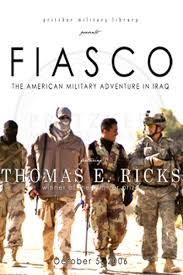
indexFrom 2006. Not the best-written book. Lots of vignettes, often little narrative flow. He drops characters that he should be coming back to: Cheney is never mentioned after page 100 for example. I don’t think any Iraqi leaders other than Chalabi and Moqtada al-Sadr are mentioned, and even then only tangentially. But if you want to be convinced that the whole invasion and occupation was a fiasco, and the Bush, Cheney, Rumsfeld, and Wolfowitz were responsible, this is a great introduction and heard to beat. I was convinced. Usually I am pretty skeptical. I remember my parents had The Rise and Fall of the Third Reich by Shirer (they kept it out of sight, in the garage… imagine!), and that kind of a book about the Iraq invasion would be worth reading.

Posted in Book and film reviews | Comments Off on Fiasco, by Thomas Ricks

Adam and Allison Grant rewrite children’s books and much fiction: “Noble deed doers, you should first lecture the victims and help them help themselves more otherwise you are an enabler…”

OK I’m making fun a little, but their essay on The Giving Tree just rubs me the wrong way. Instead of marveling at the moral ambiguity of the book, the impulse is to “fix” it by explaining to you child what the right “lesson” is. Assume your child will take away the “wrong” lesson, too.

But my book club just finished reading and discussing The Big Sleep, and I guess I do not think the novel would have been very good if Marlowe had taken a few days off after telling Vivian, “Eddie Mars and his crew play too rough: I think I’m risking too much of my self for values I am not sure I can articulate, I need some me time and I’ll get back to you later…”

Posted in Burkina Faso | Comments Off on Adam and Allison Grant rewrite children’s books and much fiction: “Noble deed doers, you should first lecture the victims and help them help themselves more otherwise you are an enabler…”

Great article in The New York Times about rural America and public services

I watched the fight unfold with a sense of sadness, anger and frustration. I started arguing. It didn’t work. The pay request was pulled from the Quorum Court’s agenda.I didn’t realize it at first, but the fight over the library was rolled up into a bigger one about the library building, and an even bigger fight than that, about the county government, what it should pay for, and how and whether people should be taxed at all. The library fight was, itself, a fight over the future of rural America, what it meant to choose to live in a county like mine, what my neighbors were willing to do for one another, what they were willing to sacrifice to foster a sense of community here.The answer was, for the most part, not very much.

Posted in Burkina Faso | Comments Off on Great article in The New York Times about rural America and public services

Trivia from movie version of The Big Sleep

bsconladyFrom a great blog post on the film The Big Sleep: http://www.waynesthisandthat.com/bigsleep.htm

Agnes Lowzier, the saleslady at Geiger’s bookstore and Joe Brody’s accomplice, played by Sonia Darrin. Although her face is very familiar it’s difficult to find information on her. She’s appeared in only seven films, all but one of which were uncredited. It’s odd she was uncredited in The Big Sleep because she had as much screen time and dialog as Carmen.

Mystery Solved!

In 2016 Ms. Alice Griffin very kindly contacted me to provide a link to an article with an interview with Sonia Darrin explaining why she didn’t receive screen credits. After filming but before the first release, Ms. Darrin’s agent got into a violent argument with studio head Jack Warner. As a consequence, Mr. Warner declared he would never hire anyone connected with the agent and had Ms. Darrin’s name stricken from the screen credits. He might have gone as far as cutting her from the movie altogether, but her scenes were too important to do so. Ms. Darrin’s career never took off after that and she moved to New York, where she was successful as a top model. I’d like to express my profound appreciation to Alice Griffin for resolving this mystery. (Thanks, Alice!)

Posted in Book and film reviews | Comments Off on Trivia from movie version of The Big Sleep