A witch is killed by machete in eastern Burkina Faso

Gruesome, but this is the opportunity cost of few books and bad education…

Omandibiga Tenihala a été lynchée à mort parce qu’elle a été déclarée sorcière par la population du secteur n° 3 du village de Logobou. Selon la version répandue et les témoignages recueillis par la police et le maire, c’est elle qui aurait « mangé » Oulépaguini Dadjoari, Labidi Yonli, Amado Kombari et Diéyabidi Lompo. La dernière victime de la sorcière présumée, se trouve être le petit-frère du maire qui habite aussi le secteur n°3 que la défunte. Diéyabidi Lompo aurait, en effet succombé des suites d’un ballonnement affreux de ventre et persistant, suivi de vomissements de caillots de sang. Il est mort le 19 mars 2013. Soit environ un mois entre la mort du frère du maire et ce lynchage. « Mon frère a souffert avant son décès », reconnaît le maire. Aux yeux des présumés auteurs de la vindicte populaire, la mort du petit-frère du maire était le décès de trop ! Des témoignages, il ressort qu’au matin du lynchage, les jeunes du secteur n°3 ont tenu une réunion « secrète » dont l’ordre du jour est diversement interprété tant par les forces de l’ordre, surprises par la rapidité du dénouement malheureux, que par le maire lui-même. C’est à l’issue de ce rassemblement suspect des jeunes, que la dame a été assommée devant une population indifférente. Des jeunes que nous avons rencontrés, se vantent effectivement d’avoir « broyé » le crâne de la victime tout simplement parce qu’elle a « mangé beaucoup de gens à Logobou dont le petit-frère du maire ».
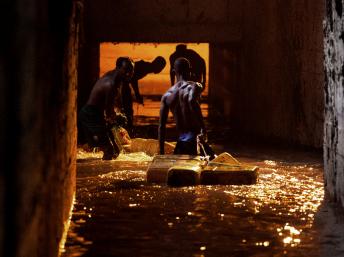
via Lynchage d’une présumée sorcière : Le droit de vie dénié à Logobou – leFaso.net, l’actualité au Burkina Faso.

Posted in Politics | Comments Off on A witch is killed by machete in eastern Burkina Faso

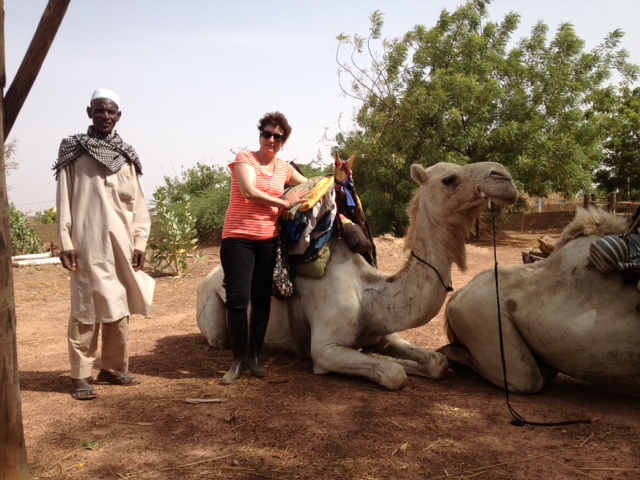
Do you need riding boots to ride this thing?

photo

Posted in Burkina Faso | Comments Off on Do you need riding boots to ride this thing?

«Grigris» de Mahamat-Saleh Haroun, trahir pour rester humain – 66e Festival de Cannes – RFI

Seul réalisateur africain en lice pour la Palme d’or, le Franco-Tchadien Mahamat-Saleh Haroun est appelé par certains à représenter toute l’Afrique au Festival de Cannes 2013. Après le prix du Jury pour Un homme qui crie en 2010, il présente ce 22 mai Grigris, son premier film tourné en numérique et cofinancé par son pays d’origine. Une histoire d’amour entre un jeune danseur handicapé et une jeune prostituée qui se déroule à nouveau au Tchad, mais loin des actuelles préoccupations politiques.

via «Grigris» de Mahamat-Saleh Haroun, trahir pour rester humain – 66e Festival de Cannes – RFI.

Posted in Culture | Comments Off on «Grigris» de Mahamat-Saleh Haroun, trahir pour rester humain – 66e Festival de Cannes – RFI

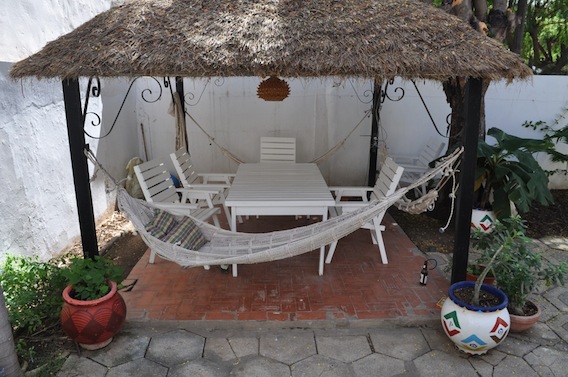
I want this in our house in the village….

“I re-built the gazebo in the garden, installed hammock hooks and Malian hammocks, and thatched the roof. After some weeks of searching, I found a man who came with a lorry load of grass from the Gambia, leapt on the roof and sewed it all together. On Friday nights I get out my film projector and we watch movies projected on the wall. There’s no cinema in Dakar so we have to make our own fun.

via Your Home is Lovely: interiors on a budget: House of Rose Repose.

Posted in Burkina Faso | Comments Off on I want this in our house in the village….

A nice story leading to a great quote about trust… West Africa and Other Notes

I’ve been friends with Abass since Christmas, when he sold me a length of cloth with the letters ‘VIP’ printed in green bubbles. There was something very straightforward about him and especially I liked his choice of cloths, a small and interesting selection from all over west Africa, and none of the Chinese copies which now fill the Senegalese markets.

Abass is in his early twenties. Abass’s shop is little more than a narrow cubicle but shimmers with colour, the multi-coloured cloths hanging from wooden frames high above his short wooden stool. On a cassette player beside his chair, he plays Bob Marley cassettes and chats with his many customers.  Abass used to go to business school in Dakar, but dropped out because of the teachers’ strikes. “I was discouraged,” he says, with a little shrug of his shoulders. “I decided to give up.” Instead, he tells me …he went into the cloth business.  “If people believe you’re from Ivory Coast or Congo, he says, you can sell fabric at twice the price. “Me,” he said, running his hand through his wet-wave hair, “I look a bit foreign so people think my cloth is special quality.”

Abass only buys the high quality, unusual fabrics that sell for around 1,500 CFA francs (€2.30) a yard, and more than that if he can manage it. He buys his cloth from traders who come from all over west and central Africa, and what he doesn’t sell in his market stall he gives to women who act as middlemen, doing the rounds of the offices at the end of the month. These middle-women leave the cloths with the women at the offices, and then go back at the beginning of the month, when they have been paid, to collect the money. Then they give Abass his cut.  He applies a similar tactic to the men who sell the cloth in the neighbourhoods. He gives them lengths of cloth and they go around the houses selling from door to door. Sometimes, he says, the men will strike deals with clients who agree to pay for the cloth 100 francs (€0.15) a day. A length of cloth could take three months to pay off, and much more if the cloth has gone for a higher price. The salesman will go back every day, remembering in his head who owes what, and collect his money until the cloth is fully paid off.

I wonder if Abass has ever lost his money to one of the clients or middlemen. “You foreigners,” he chuckles a friendly laugh as he stands up to rearrange a bolt of cloth one of his customers has pulled down off the rack, “you believe in written contracts. But we Africans, we do everything with oral contracts. I have never lost any money this way.”

via West Africa and Other Notes. (Note- see link for original… I edited it down 😉

Posted in Development thinking | Comments Off on A nice story leading to a great quote about trust… West Africa and Other Notes

Afrobarometer results for Burkina Faso

From Afrobarometer.  Majorities against extension of presidential term limits and against creation of the Senate.

Selon l’enquête menée en décembre 2012, environ 6 personnes sur 10 sont favorables au principe de la limitation du nombre de mandats présidentiels. Cette proportion s’est même accrue de 11 points entre 2008 et 2012, passant de 53% à 64%.

…il n’est pas surprenant que plus de la moitié des enquêtes (54%) ne soient pas d’accord que l’on modifie la Constitution pour permettre au président Compaoré de se présenter en 2015.

Plus de la moitié des personnes interviewées (52%) sont d’accord avec l’idée que “la création d’une deuxième chambre n’est pas une bonne chose, car cela va entrainer des dépenses supplémentaires pour notre démocratie”.

Posted in Politics | Comments Off on Afrobarometer results for Burkina Faso

“Scientific” approach to philanthropy

Here’s how it works, apparently:

(1) Start with tiny mistake of not recognizing that you got really really rich because you were lucky.  (Right place, right time, born in U.S. not in Colombia, father not a drug addict or violent criminal, mentor said “plastics” or “finance”, won an early competition because smarter person was sick that day, teacher smiled when gave right answer, you get the idea.)  Instead of thinking you were lucky, act and assume like you are a lot smarter/hardworking/go-getter/risk-taker than everyone and that is why you are so rich.  You deserve it.  Reflect on Matthew 20: “Are you jealous? Cannot I do as I please?”

(2) Make assumption that universities and academics have contributed nothing to the world unless they are entertaining at dinner or over coffee.

(3) Decide to spend a lot of money hiring entertaining academics and go-getters to do philanthropy right, because your team is the only group that actually can figure it out.

(4) The team needs a headquarters.  An entertaining architect can design one.  Sounds fun.  Why rent a dingy office building in Tamale?  Ugh.  The walls will be painted that sickly green.

(5) Why not establish a university, well-funded, in Niamey?  The university can be carefully designed to take remedial high school students through some good learning into semi-professional competency.  Dismiss that thought: team didn’t think of it, nothing fun about that, sounds like a lot of boring decisions, university graduates often get pushy and ungrateful.  Sometimes they protest for human rights and government shuts everything down.  Next!

(6) Ahem, I mean no randomized control trial properly measured the development impact of a subsidized effective private university in Niamey.  We only invest in activities with proven results.

(7) Aren’t worms bad?  Somebody already doing that…  I’m really smart so I have to come up with a new thing.  Team, are you listening?

Posted in Development thinking | Comments Off on “Scientific” approach to philanthropy

In a semi-authoritarian democracy, you just have your legislative super-majority do your bidding

In the case of Burkina Faso the super-majority CDP packs the house by creating a Senate (which many of them will enjoy the air-conditioned privileges of) and displays some false modesty by stripping away apparently the part that says that the super-majority can amend the constitution whenever it likes.

La création du Sénat, porte ouverte pour la modification de l’article 37 de la Constitution ?

La question, beaucoup de gens se la posaient ; et les députés l’ont posée au gouvernement. Non, répond ce dernier qui précise que des procédures existent dans la Constitution permettant sa modification. La création du Sénat « n’est pas liée à une quelconque intention de modifier l’article 37 de la Constitution », mais « répond au souci de compléter l’architecture du parlement tel que prévu » par la loi fondamentale en son article 78.

Le moins que l’on puisse dire, c’est que l’intention a été clairement affichée dans le projet de loi avant amendements des députés, de permettre au chef de l’Etat de procéder facilement à la modification de la Constitution. En effet, l’article 15 disposait dans son alinéa 1 que « Le Parlement est convoqué à l’initiative du Président du Faso en vue de l’adoption du projet de révision de la Constitution sans recours au Référendum ». Et précise en son alinéa 2 que « Le projet de révision constitutionnelle est adopté s’il est approuvé à la majorité qualifiée des trois quarts (3/4) des membres composant la Parlement.

Fort heureusement, les travaux en commission ont permis d’élaguer ces deux alinéas de l’article 15. Resté en l’état, cet article donnait au chef de l’Etat de modifier la Constitution dès lors qu’il rallie 164 voix des 218 que comptera désormais le Parlement en tant réunion des deux chambres (Assemblée nationale et Sénat).

via Assemblée nationale : Le projet loi relatif au Sénat est adopté – leFaso.net, l’actualité au Burkina Faso.

Posted in Politics | Comments Off on In a semi-authoritarian democracy, you just have your legislative super-majority do your bidding

New favorite phrase: jirané nyimi

I may have the spelling wrong.  Three Dioula speakers I’ve talked with may all be saying the same exact thing but I swear I am hearing three different sounds.  It literally means griller, manger in French which means “Grill, Eat” in English.  it is used in the context where someone is chaud, chaud which means “hot, hot” which means you are in a hurry to get your money.  You want your money right now!  So it’s like “grilliteatit” (you have to say it fast, in Dioula too).  Does English have an equivalent?

Speaking of French… In New York Times the other day BTW saw creole phrase from Haiti resteavek, which obviously is coming from rester avec and presumably is coming from very strong West African matrilineal traditions of fostering out children to maternal side of the family.  But in Haiti seems more like child abuse situations?

Posted in General | Comments Off on New favorite phrase: jirané nyimi

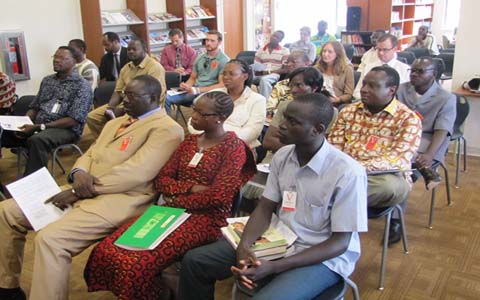
Our book launch at U.S. Embassy on leFaso.net

Thanks to all the friends and supporters who came out, and thanks to the Embassy for hosting.

Les conclusions du livre ont été partagées par l’assistance. Le Dr Yves Dakuyo, enseignant à l’Université de Ouagadougou parle de son expérience : « Ce constat se fait à tous les niveaux de l’éducation au Burkina Faso. Même à l’Université de Ouagadougou, les étudiants, à première vue, donnent l’impression de ne pas aimer la lecture. Mais c’est en réalité la disponibilité des ouvrages qui pose problème ».

Afin de résoudre cela, les chercheurs ont proposé que soient créées et équipées des bibliothèques et que l’accent soit mis sur les romans burkinabè. « Car il en manque dans nos bibliothèques ». Ils ont également lancé, en partenariat avec l’Université américaine de Santa Clara, un projet dans la province du Tuy dénommé « Les jeunes de Tuy lisent » afin de stimuler la lecture chez les jeunes. 300 jeunes prennent part à ce projet et près de 14 bibliothèques sont équipées à cet effet.

via Burkina Faso : Les élèves ne lisent pas assez – leFaso.net, l’actualité au Burkina Faso.

Posted in General | Comments Off on Our book launch at U.S. Embassy on leFaso.net

Debate over specifics of the new Senate in Burkina Faso

In December 2011 the National Assembly revised by 3/4 vote the Constitution.  One of the changes was to introduce bicameralism, with a Senate.  Who is in the 90-person Senate? (Well, for starters older people only please… you have to be over 45…. )

Les sénateurs représentant les autorités coutumières et religieuses, les travailleurs, le patronat et les Burkinabè de l’étranger sont désignés par leurs structures respectives.

So chiefs, religious leaders, bosses and workers, and dishwashers in Paris… but no farmers… hmmm… 75% of the population doesn’t get any representation in the Senate… just like in the United States!

via constitution-revisee-juin-2012.pdf.

Posted in Politics | Comments Off on Debate over specifics of the new Senate in Burkina Faso

Good growth in Burkina Faso… all those children are working in the gold mines instead of tending goats.

Ms. Laure Redifer, IMF mission chief for Burkina Faso, issued the following statement in Ouagadougou today:

“Despite external shocks, economic activity in 2012 was robust, with estimated GDP growth reaching 9 percent, due to a strong 2012 agricultural harvest, stronger than expected mining production and strong activity in services. The harvest brought food prices and overall inflation down, in line with expectations, and average inflation has remained in the range of 3.5-4.0 percent. External balances deteriorated in 2012, although not as much as feared, as higher import needs were offset by larger mining and cotton exports than forecast.

“Revenue collection was strong in 2012, with total revenues reaching 17.7 percent of GDP. Expenditures, including those authorized in the reconciliation law, were in line with expectations, but the composition reflected lower than expected execution of investment projects financed by external resources — offset by higher than expected recurrent spending and domestically-financed investment spending. The resulting fiscal deficit was 3.1 percent of GDP, in line with expectations. All quantitative targets and most structural measures contained in the program for end-December 2012 were met.

via Press Release: Statement at the Conclusion of an IMF Staff Mission to Burkina Faso.

Posted in Economy | Comments Off on Good growth in Burkina Faso… all those children are working in the gold mines instead of tending goats.

Chantal Terrasson de Fougueres and Blaise Compaore

They keep a very, very low personal profile in the press.

Neuf juillet 2008. L’antenne française de Transparency International dépose à Paris une plainte pour recel de détournements d’argent public visant les conditions dans lesquelles un important patrimoine immobilier et mobilier aurait été acquis en France. Sur la sellette, cinq chefs d’Etat africains, dont le président burkinabé Blaise Compaoré. L’enquête préliminaire de la police française n’a pourtant dévoilé aucun mètre carré lui appartenant “explicitement”. Seule la déclaration d’impôt sur la fortune de son épouse a montré que celle-ci possédait deux biens immobiliers à titre personnel dans le XVIe arrondissement. Chantal Compaoré : riche héritière ou femme de paille ?

La première dame du Burkina Faso est assurément “mieux née” que son époux. Elle est la fille du Dr Jean Kourouma Terrasson – une figure de l’histoire de la Côte-d’Ivoire – et la petite-fille du gouverneur colonial Jean Henri Terrasson de Fougères. Le père de Mme Compaoré a officié dans plusieurs cabinets du ministère de la Santé et côtoyé à l’occasion le présumé entremetteur du couple Compaoré : l’Ivoirien Félix Houphouët-Boigny [qui a dirigé la Côte-d’Ivoire de 1960 à 1993].

via BLAISE & CHANTAL • M. Carpe et Mme Lapin à Ouagadougou | Courrier international.

Posted in Politics | Comments Off on Chantal Terrasson de Fougueres and Blaise Compaore

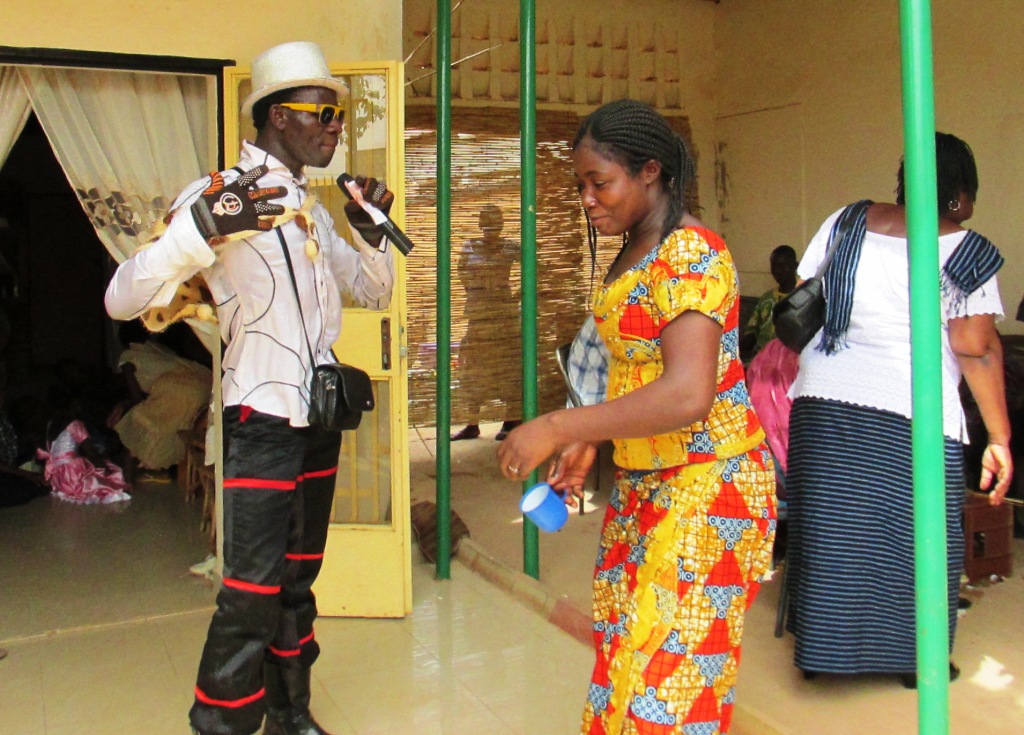
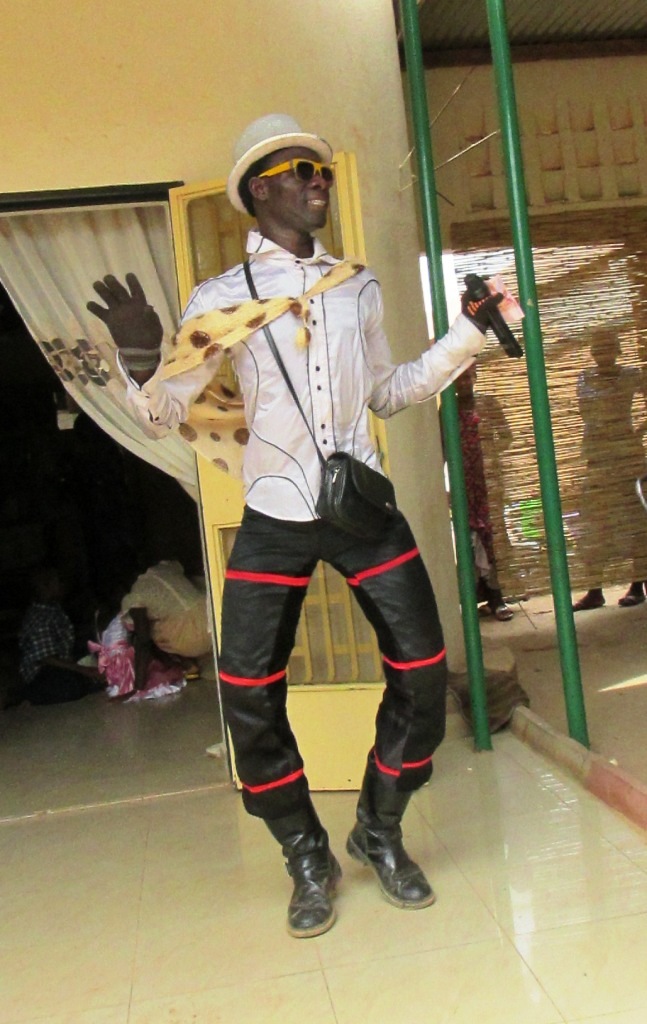
Now that’s entertainment…. a Michael Jackson DJ-Dancer-clown at a first communion party in Ouagadougou

entertain 1 entertain 2

Posted in Burkina Faso | Comments Off on Now that’s entertainment…. a Michael Jackson DJ-Dancer-clown at a first communion party in Ouagadougou

Mining industry and transparency in Burkina Faso

Shocked… the whole point of EITI is that civil society push government and industry into more transparency… this news story on a meeting yesterday (notice the prominent World Bank logo on the banner… another 200.000 FCFA wasted on a banner)…. does not mention a single civil society person, nor mention anything at all about the implied tax rates of mining sector in Burkina Faso (which are very low) nor the current very non-transparent process of revising the mining code in Burkina Faso…

Le secrétariat permanent de l’Initiative pour la transparence dans les industries extractives (ITIE) Burkina Faso a organisé le vendredi 17 mai 2013 un atelier de programmation des activités post conformité de l’ITIE. Tenu dans la salle de conférence de la Direction générale de la coopération, cet atelier avait pour objectif de montrer aux différentes parties prenantes la conduite à tenir pour le Burkina Faso pour conserver durablement son statut de « pays conforme à l’ITIE ». Cet atelier a vu la participation effective de Tibila Kaboré (secrétaire permanent du ministère de l’économie et des finances et président du comité de pilotage de l’ITIE BF), Dakar Djiri (secrétaire permanent de l’ITIE BF), Brigitte Bocoum (de la banque mondiale), Dyveke Rogan (secrétariat international de l’ITIE) et des acteurs du secteur minier.

via ITIE BF : Mener des réflexions pour que le Burkina Faso maintienne son statut de pays « conforme » – leFaso.net, l’actualité au Burkina Faso.

Posted in Economy | Comments Off on Mining industry and transparency in Burkina Faso

George Packer Whining about Celebrity

George Packer’s Togo Peace Corps memoir is known as “In the Village if Whining” but if you didn’t know that you’d think he was a sharp, insightful person (which he is, I’m just being mean and snarky) … but this op-ed whining about celebrity culture, from a person who himself is a celebrity, strikes me (not a celebrity) as self-indulgent.  You have to openly say: “Heck, I did have the chance to stay working in West Africa and remain a non-celebrity my whole life, but I decided I would rather become a celebrity myself.”  Packer seems to offer no insight into how someone like himself ( a celebrity) should act (with abnegation, instead of writing yet another op-ed in the world’s most read newspaper?).  If he was putting his money where his mouth is, he’d give Togo a second chance and announce (at Davos?) that he was going to spend three years in a Togolese village and NOT write anything about it, not blog about it, not tell amusing stories about it (why sing for a supper that celebrities are paying for?) and be cranky, hot, and miserable.

This new kind of celebrity is the ultimate costume ball, far more exclusive and decadent than even the most potent magnates of Hollywood’s studio era could have dreamed up. Their superficial diversity dangles before us the myth that in America, anything is possible — even as the American dream quietly dies, a victim of the calcification of a class system that is nearly hereditary.As mindless diversions from a sluggish economy and chronic malaise, the new aristocrats play a useful role. But their advent suggests that, after decades of widening income gaps, unequal distributions of opportunity and reward, and corroding public institutions, we have gone back to Gatsby’s time — or something far more perverse. The celebrity monuments of our age have grown so huge that they dwarf the aspirations of ordinary people, who are asked to yield their dreams to the gods: to flash their favorite singer’s corporate logo at concerts, to pour open their lives and data on Facebook, to adopt Apple as a lifestyle. We know our stars aren’t inviting us to think we can be just like them. Their success is based on leaving the rest of us behind.

“The rest of us?”  Yeah right.  Just another working class writer at The New Yorker BFF with Tina and Ariana… PS Packer doesn’t seem to recall that in the 1920s plenty of people were choosing a non-celebrity “lifestyle”… Emma Goldman RIP…. via Inequality and the Modern Culture of Celebrity – NYTimes.com.

Posted in United States | Tagged | Comments Off on George Packer Whining about Celebrity

PM in Burkina Faso visits construction projects

State-led development still has its place…. government organizes planned urban development, building 1500 housing units in Bassinko north of Ouagadougou on road to Yako then selling them to individuals (chosen at random supposedly in a lottery) who have to obtain private bank mortgages.  Cost of the small houses is about $20,000.

le Premier ministre Luc Adolphe Tiao a visité ce 17 mai 2013 à Ouagadougou, des chantiers lancés il y a quelques mois. Du site de logements sociaux à Bassinko au canal de drainage d’eau au niveau du parc Bangr- Wéogo en passant par l’hôtel administratif du Centre, le Chef du gouvernement a constaté de visu l’évolution des travaux et échangé avec les responsables des entreprises qui s’activent à la réalisation d’infrastructures attendues à bref délai.

via Luc Adolphe Tiao : « Le vrai problème au Burkina c’est que nous n’avons pas de vraies entreprises performantes, capables de réaliser des travaux de grande échelle et de grande qualité ». – leFaso.net, l’actualité au Burkina Faso.

Posted in Economy | Comments Off on PM in Burkina Faso visits construction projects

Joe Penney on Burkina Faso and Mali… beautiful photos, but the accompanying sentence is disingenuously wrong

Not sure what metric Joe Penny uses for the “no development” criteria.  Burkina Faso is still way at the bottom on the global scale of human development, but that is not the same as no development.  There has been very large investment in schooling and health care, and education attainment and mortality and morbidity are much improved over 30 years.   The economy is changing rapidly.  I would also say that Blaise Compaoré is neither strongman nor democrat…. just because English doesn’t have a complex noun to describe him in a single word doesn’t mean the default is to choose whichever extreme noun he is closer to.

In Mali’s neighbor, Burkina Faso, strongman Blaise Compaore is still holding on to power at all costs since killing popular leader Thomas Sankara in 1987. After 25 years in power backed by the West, there has been no development in the country.

via Mali – Burkina: Sahel Instability : Joe Penney – Photo and text journalism.

Posted in Economy | Comments Off on Joe Penney on Burkina Faso and Mali… beautiful photos, but the accompanying sentence is disingenuously wrong

Huh? Discovered in Burkina Faso?

Who knew it would take me to come to Burkina Faso to first hear Girlfriend by Jesus and Mary Chain.  I missed a decade of music, you know.  So that means there will be lots of gems like this out there.

Posted in Burkina Faso | Comments Off on Huh? Discovered in Burkina Faso?

What are teachers and students striking for in Burkina Faso?

C’est pour toutes ces considérations que nous attirons une fois de plus l’attention de tous les acteurs de l’éducation dont l’Etat autour des problèmes ci-dessous :

1. La construction d’infrastructures dans les différents ordres d’enseignement ;

2. L’amélioration des conditions de vie, de travail et d’études des élèves, des étudiants et du personnel du système éducatif dans tous les ordres d’enseignement ;

3. Le respect du cahier de charge dans l’ouverture des écoles et établissements privés dans tous les ordres d’enseignement ;

4. L’audit de la gestion des Associations de parents d’élèves et le respect des textes portant création des associations.

5. La normalisation de l’université de Bobo afin d’accroître l’offre de formation et la création de toutes les filières de formation ;

6. La garantie de la liberté d’expression et de construction de la citoyenneté.

That from the unions in southwestern part of the country.  Teacher and student strikes can often be flashpoints of political instability.  There doesn’t seem to be any significant social movement behind the current wave of mini-strikes in Ouagadougou.  Seems more like hard bargaining.  Education policy is complex, as government manages line of state vs. private schooling, and decentralized control at commune-level vs. centralized ministerial control.

via Education : Appel du SNESS et de la F-SYNTER à la communauté éducative – leFaso.net, l’actualité au Burkina Faso.

Posted in Economy | Comments Off on What are teachers and students striking for in Burkina Faso?